
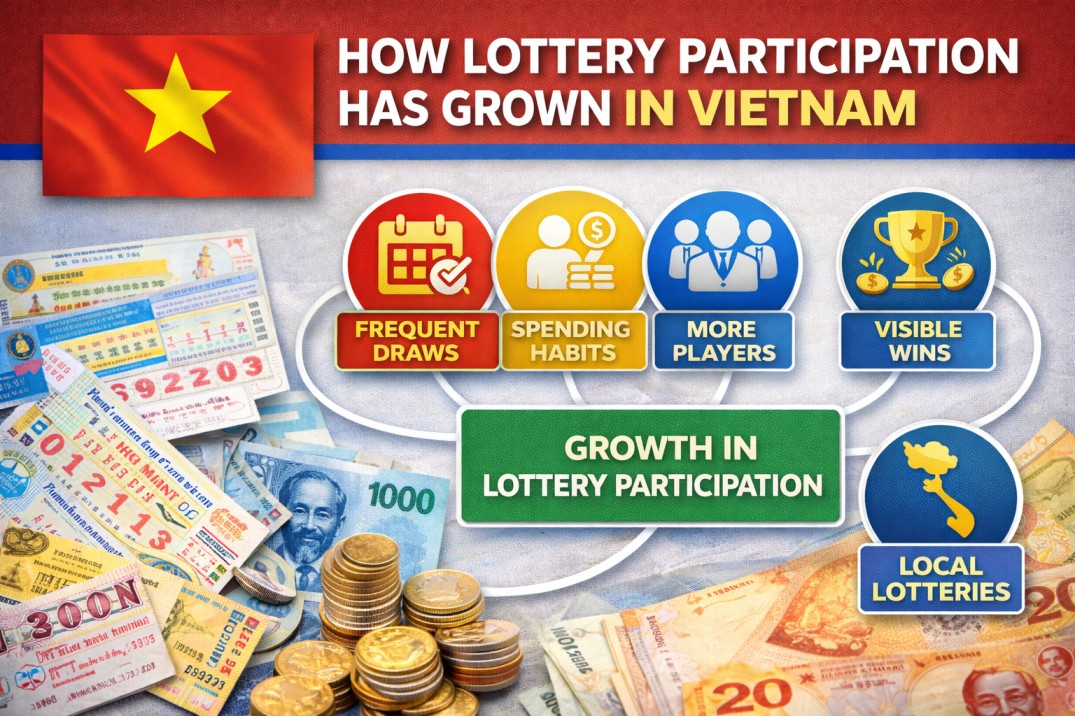
Lottery participation in Vietnam did not explode overnight.
It grew quietly.
Incrementally.
Almost invisibly.
Today, Vietnam is one of the most consistent lottery markets in Southeast Asia, not because jackpots are massive, but because participation became a daily habit rather than a rare event.
Understanding how that happened explains why Vietnam’s lottery system looks the way it does today.
Early Participation Was Modest and Purpose-Driven
When lotteries first took root in Vietnam, participation was limited.
Tickets were bought less for winning and more for contribution.
People understood the lottery as a way to support local development, not as a shortcut to wealth.
This meant:
- Lower ticket volumes
- Smaller prize expectations
- Stable but unspectacular participation
Growth at this stage was slow, but trust was being built.
Economic Stability Changed the Audience
As Vietnam’s economy stabilised and incomes rose, the profile of lottery participants began to change.
More urban workers entered the system.
Disposable income increased.
Lottery spending shifted from occasional to regular.
This transition mattered.
Participation growth did not come from poorer households alone.
It expanded across working-class and middle-income groups.
Frequency Was the Real Growth Engine
Vietnam increased participation not by increasing hype, but by increasing draw frequency.
More draws meant:
- More results to check
- More reasons to stay engaged
- Less waiting fatigue
When something happens every day, people pay attention without needing persuasion.
This is one of the most underestimated drivers of participation growth.
Provincial Lotteries Expanded the Base
Vietnam does not rely on one national lottery dominating attention.
Instead, multiple provincial lotteries operate in parallel.
This structure:
- Localised participation
- Made wins feel closer
- Reduced psychological distance
People are more likely to participate when winners feel geographically and socially relatable.
That local proximity accelerated adoption.
Smaller Wins Kept People Playing
Vietnam’s lottery system produces many small and mid-tier winners.
This matters more than jackpots.
Frequent small wins:
- Reinforce belief
- Reduce frustration
- Keep participation emotionally sustainable
People who never win anything eventually stop playing.
Vietnam’s structure avoids that drop-off.
Media Normalised Lottery Participation
Lottery results in Vietnam are treated as routine updates, not dramatic events.
This normalisation:
- Reduced stigma
- Made participation socially acceptable
- Turned lotteries into background behaviour
When something feels normal, people do not overthink it.
They participate quietly and consistently.
Informal Betting Pushed Official Growth
Vietnam has long had informal number betting markets.
Instead of ignoring this reality, official lotteries positioned themselves as:
- Legal
- Safer
- More transparent
As enforcement tightened and awareness grew, many participants shifted from informal systems to official ones.
This migration quietly boosted participation numbers.
Technology Made Access Easier, Not Flashier
Vietnam adopted technology carefully.
The goal was not to gamify the lottery, but to:
- Improve distribution
- Speed up results
- Reduce friction
Participation grows when access becomes easier, not when systems become louder.
Vietnam understood this balance.
Trust Compounded Over Time
Participation growth is cumulative.
Each year without major scandal
Each draw without disruption
Each visible payout
adds another layer of confidence.
Vietnam’s lottery did not chase rapid growth.
It allowed trust to compound.
That patience paid off.
The Big Shift: From Event to Habit
The most important change was psychological.
Lottery participation in Vietnam shifted from:
- “I’ll try once”
to - “This is something I do regularly”
Habits scale better than excitement.
Vietnam built habits.
What Vietnam’s Growth Teaches Others
Vietnam shows that lottery participation grows when:
- Draws are frequent
- Wins are visible
- Systems feel local
- Trust is boring but reliable
Big jackpots alone do not build markets.
Consistency does.
FAQs: Lottery Participation in Vietnam
1. When did lottery participation start increasing in Vietnam?
Participation began rising steadily in the late 1990s and early 2000s, alongside urbanisation, income growth, and increased draw frequency.
2. Do more Vietnamese people play lotteries today than before?
Yes. Participation has broadened across urban, working-class, and middle-income groups, not just low-income households.
3. Why do frequent draws matter for participation?
Frequent draws reduce waiting time, maintain engagement, and turn lottery checking into a routine behaviour, not an occasional event.
4. Are smaller prizes more important than jackpots in Vietnam?
Yes. Regular small and mid-tier wins keep people playing and prevent drop-off caused by long losing streaks.
5. Did informal betting influence official lottery growth?
Yes. As regulation tightened, many participants shifted from informal number betting to official, legal lottery systems, increasing participation.