
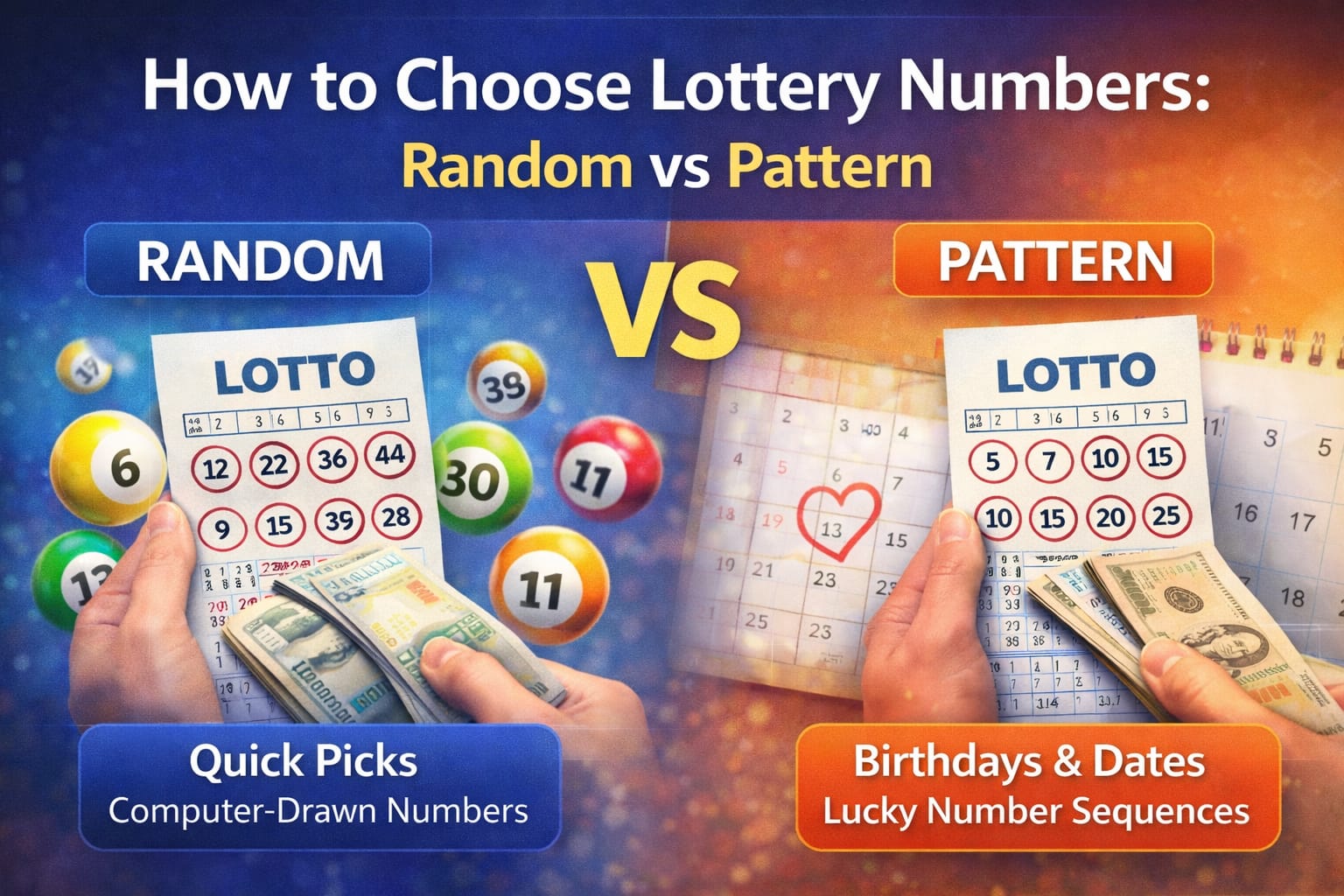
Every lottery draw sparks the same debate among players: Should I let the system pick random numbers, or should I stick to a personal pattern? From birthdays and anniversaries to carefully tracked number sequences, people approach lottery number selection in very different ways.
While there’s no guaranteed strategy to win, how players choose their numbers often says more about human behavior than mathematics.
The case for random number selection
Random number selection often called a “quick pick” removes emotion from the process. The numbers are generated by a computer or machine with no bias toward dates, patterns, or past results.
Many lottery experts point out that random picks help avoid one common issue: number clustering. When players choose dates, they typically limit themselves to numbers between 1 and 31, which means many tickets end up sharing similar combinations. Random picks are more likely to spread across the full number range, reducing the chance of sharing a prize if a winning combination appears.
For some players, randomness also brings peace of mind. There’s no second-guessing, no feeling of responsibility if the numbers lose it’s simply luck doing what luck does.
Why patterns remain popular with players
Despite the logic behind random picks, millions of players still rely on patterns. These patterns may include:
- Birthdays and anniversaries
- Repeating “lucky” numbers
- Symmetrical or visually pleasing sequences
- Numbers that have personal or cultural meaning
Patterns give players a sense of ownership. The ticket feels personal, not generated. For long-time players, sticking to the same pattern also avoids a specific fear: changing numbers and seeing the old combination win later.
Psychologists describe this as regret avoidance people would rather keep losing with familiar numbers than risk missing a win after switching.
Do patterns actually improve your odds?
From a statistical standpoint, lottery draws are independent events. This means patterns have no memory, and random numbers have no advantage or disadvantage over chosen ones. Each combination has exactly the same chance of being drawn.
However, patterns can influence outcomes in another way: prize sharing. Popular patterns such as low numbers or obvious sequences are more likely to be chosen by many players. If those numbers win, the jackpot may be split among multiple winners.
In contrast, unusual or fully random combinations are less likely to be shared, potentially increasing the payout for a single winner.
What experts generally recommend
Most lottery analysts agree on one point: there is no “smart” way to predict winning numbers. Instead, they recommend choosing a method that feels comfortable and sustainable.
If playing is occasional entertainment, patterns can make the experience more enjoyable. If the goal is to avoid shared winnings, random or less common number combinations may offer a small practical advantage—not in winning, but in how much you keep if you do.
Ultimately, the lottery remains a game of chance, not strategy.
(FAQs) Of Lottery Numbers: Random Picks vs Pattern-Based Choices
1. Is it better to use the same numbers every time?
Using the same numbers doesn’t improve your odds, but it can reduce emotional regret if those numbers ever win.
2. Are some numbers drawn more often than others?
Over the long term, lottery numbers tend to even out. Short-term patterns are usually coincidence, not trends.
3. Can avoiding popular numbers increase winnings?
It doesn’t increase your chances of winning, but it can reduce the likelihood of sharing a prize with others.