
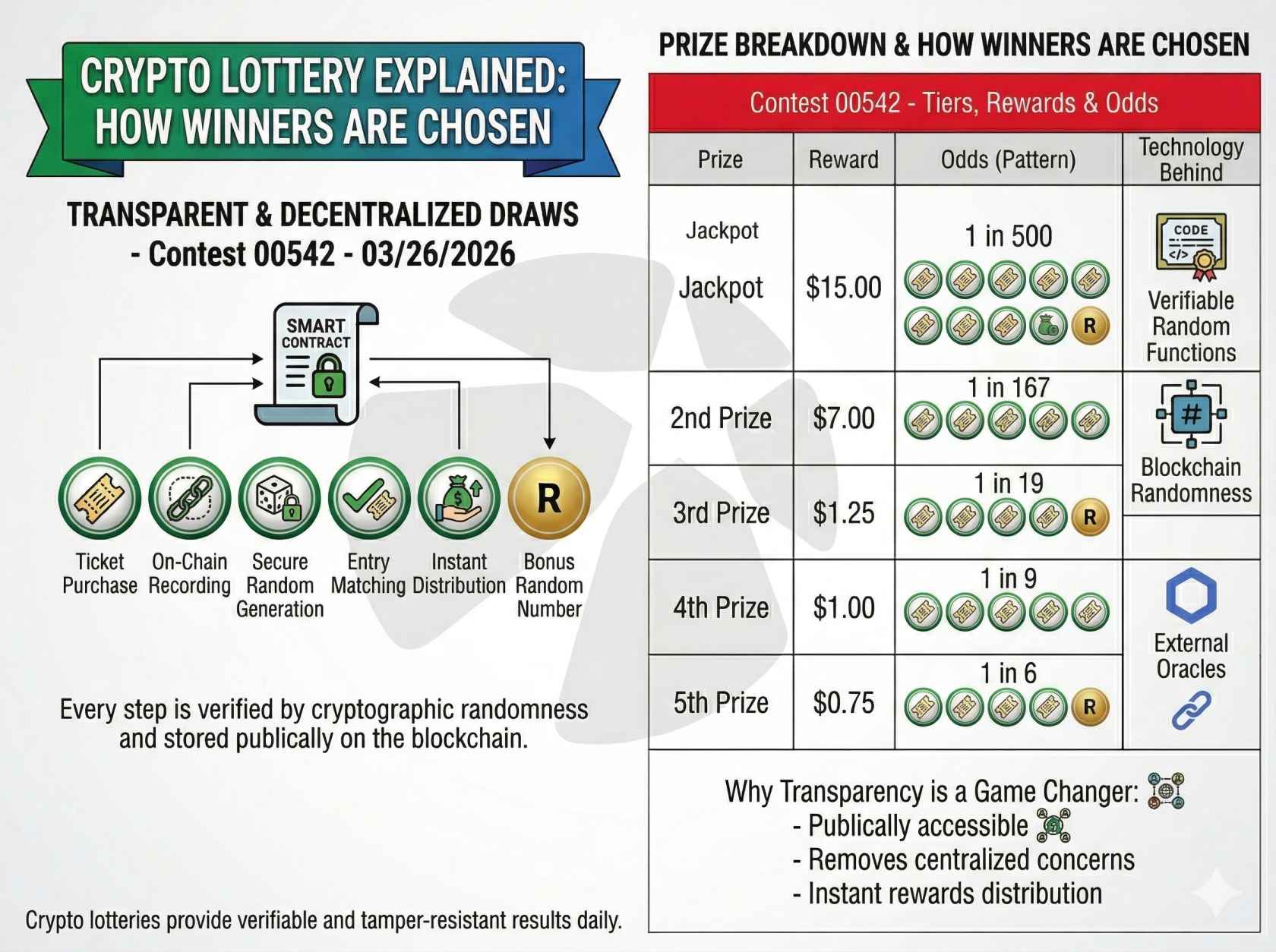
Crypto lotteries are quickly gaining attention as more users explore transparent and decentralized ways to participate in games of chance. Unlike traditional lotteries that rely on centralized systems, crypto lotteries use blockchain technology to determine winners in a way that is designed to be open, verifiable, and tamper resistant.
But how exactly are winners chosen in these systems, and can players really trust the process? Here is a clear and practical breakdown of what happens behind the scenes.
How Crypto Lottery Draws Actually Work
At the core of every crypto lottery is a smart contract. This is a self executing program stored on a blockchain that automatically handles ticket purchases, records entries, and selects winners.
Instead of a physical draw, the system uses cryptographic randomness to pick winning numbers or wallet addresses.
Here is the simplified flow:
- Players buy tickets using cryptocurrency
- Each entry is recorded on the blockchain
- A random number is generated using a secure method
- The smart contract matches the result with entries
- Winners are selected and payouts are triggered instantly
Because everything is recorded publicly, anyone can verify the results.
The Technology Behind Winner Selection
Crypto lotteries rely on advanced randomness systems to ensure fairness. The most commonly used methods include:
1. Verifiable Random Functions
These generate random numbers along with proof that the result has not been manipulated.
2. Blockchain Based Randomness
Some platforms use block hashes or timestamps as part of the randomness process.
3. External Oracles
Services like Chainlink provide secure random numbers that cannot be predicted or altered.
This combination ensures that no single party can control the outcome.
Example Prize Distribution in a Crypto Lottery
To better understand how winnings are structured in many crypto lotteries, here is a real style prize distribution model based on a tiered reward system:
Prize Breakdown
| Tier | Match | Reward | Odds |
|---|---|---|---|
| Jackpot | 5W + 1R | $15.00 | 1 in 500 |
| 2nd Prize | 5W | $7.00 | 1 in 167 |
| 3rd Prize | 4W + 1R | $1.25 | 1 in 19 |
| 4th Prize | 4W | $1.00 | 1 in 9 |
| 5th Prize | 3W + 1R | $0.75 | 1 in 6 |
This type of structure shows how crypto lotteries often balance high jackpot rewards with frequent smaller wins. Lower tiers have better odds, which keeps players engaged, while the jackpot remains harder to hit but more rewarding.
In most blockchain based systems, once results are finalized, rewards are instantly distributed to winners’ wallets without manual processing.
Why Transparency Is a Game Changer
One of the biggest advantages of crypto lotteries is transparency. Every transaction, entry, and result is stored on the blockchain, making it publicly accessible.
This removes common concerns found in traditional lotteries, such as:
- Lack of visibility in draw processes
- Delayed payouts
- Dependence on a central authority
Players can independently verify results without trusting a single organization.
Are Crypto Lotteries Really Fair
While the technology is designed to be fair, not all platforms are equal. The fairness depends on how the system is implemented.
Look for these indicators:
- Use of verifiable randomness
- Open source smart contracts
- Third party audits
- Transparent prize distribution
If these elements are present, the system is generally considered reliable.
FAQs For Winners Are Chosen in Crypto Lotteries
1. Can crypto lottery results be manipulated by developers
If the system uses proper decentralized randomness and audited smart contracts, manipulation is extremely difficult.
2. Do I need technical knowledge to participate
No, most platforms have simple interfaces similar to traditional lottery apps.
3. Are crypto lottery winnings taxable
Tax rules depend on your country, so it is important to check local regulations.
4. What happens if there is a bug in the smart contract
If not properly audited, bugs can affect outcomes, which is why choosing trusted platforms is important.