
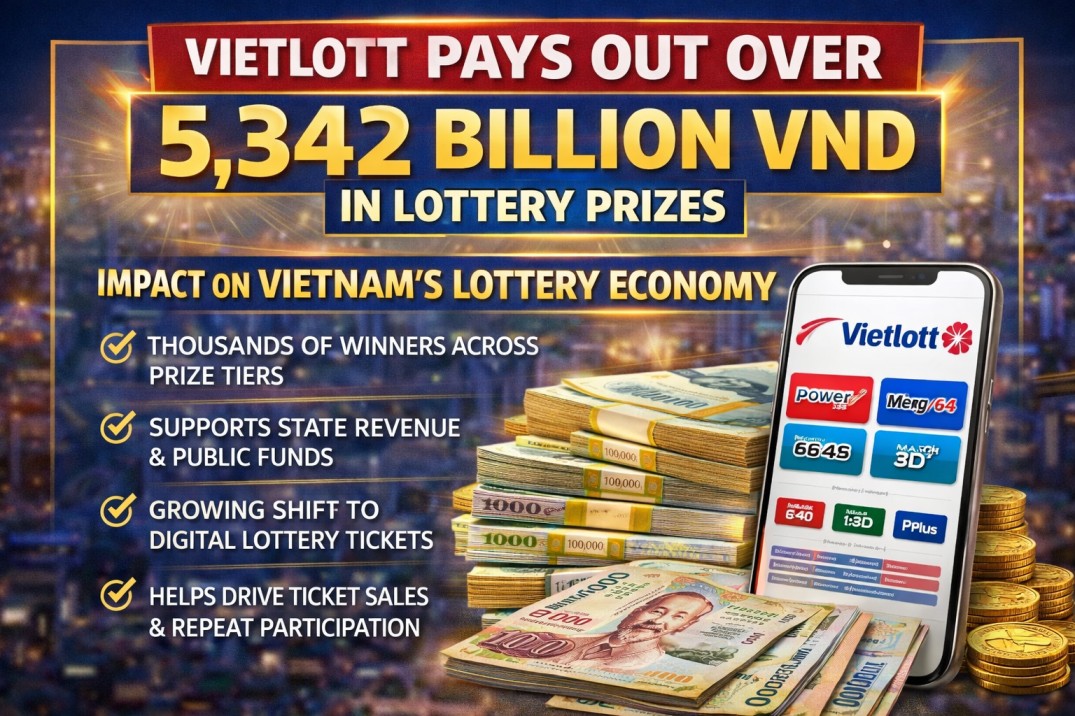
Vietnam’s national digital lottery operator Vietlott has crossed a major milestone. According to its latest disclosure, the company has paid out more than 5,342 billion VND in prize money to players across the country. This is not a single jackpot story. It is a long-term signal of how fast Vietnam’s lottery market is evolving.
Behind this headline number lies a deeper story about player behaviour, digital adoption, government revenue, and trust in regulated lottery systems.
What Does 5,342 Billion VND in Payouts Actually Mean?
To put this figure in perspective, 5,342 billion VND translates into thousands of winners across multiple prize tiers, not just a few mega jackpot holders. Vietlott operates several games where payouts are structured to reward both:
- High-value jackpot winners
- A large base of mid and small-tier winners
This model ensures regular payouts and keeps participation broad rather than concentrated among a handful of winners.
How Vietlott’s Lottery Model Is Different
Unlike traditional paper-based lotteries, Vietlott operates as a digitally managed, number-draw lottery system with fixed rules, transparent odds, and centralized verification.
Key differences include:
- Computerized draw systems
- Public verification of winning numbers
- Centralised prize validation
- Faster claim processing for winners
This structure has helped Vietlott build higher public trust, especially among younger and urban players.
Where the Prize Money Is Going
The payout data shows that winnings are spread across:
- Jackpot prizes worth tens or hundreds of billions VND
- Second and third-tier prizes with higher win probability
- Frequent smaller wins that encourage repeat participation
This layered payout system is one reason Vietlott has seen consistent ticket sales even when jackpots are not at record highs.
Why This Matters for Vietnam’s Economy
Lottery payouts are only one side of the equation. Vietlott also contributes significantly to:
- State budget revenue
- Local development funds
- Public welfare and infrastructure spending
In simple terms, money circulates back into the system. Players spend on tickets, winners receive payouts, and the government earns tax and operational revenue.
This is why regulated lotteries remain an important financial tool in many countries, including Vietnam.
A Shift in Player Behaviour
Data from recent years shows a clear trend:
- Players are moving from traditional local lotteries to digital formats
- Younger demographics prefer transparent and tech-enabled systems
- Trust and ease of claiming prizes are now as important as jackpot size
Vietlott’s growing payout figure reflects this shift.
The Psychology Behind Sustained Lottery Participation
Big jackpot headlines attract attention. But regular payouts create habit.
When players see frequent winners, even at smaller levels, it reinforces belief in the system. This psychological loop is one of the strongest drivers of lottery participation globally, from Vietnam to the United States.
What Comes Next for Vietlott?
With payouts already crossing 5,342 billion VND, industry watchers expect:
- Larger jackpots during rollover cycles
- More innovation in game formats
- Increased focus on digital ticketing and verification
- Stronger regulatory scrutiny as volumes grow
The real challenge will be balancing growth with responsible play.
FAQs
1. Is 5,342 billion VND paid to a single winner?
No. This amount represents total cumulative prize payouts to many winners across different Vietlott games and prize tiers.
2. How does Vietlott fund such large payouts?
Payouts come from ticket sales revenue, structured payout ratios, and regulated lottery operations approved by the government.
3. Are Vietlott winnings taxable in Vietnam?
Yes. Lottery winnings above the taxable threshold are subject to personal income tax as per Vietnamese law.
4. Why do people keep playing even if odds are low?
Because Vietlott offers multiple prize tiers, not just jackpots. Smaller but frequent wins keep players engaged.
5. Is Vietlott considered safe and legitimate?
Yes. Vietlott is a state-authorised lottery operator with regulated draw systems and transparent prize verification.