
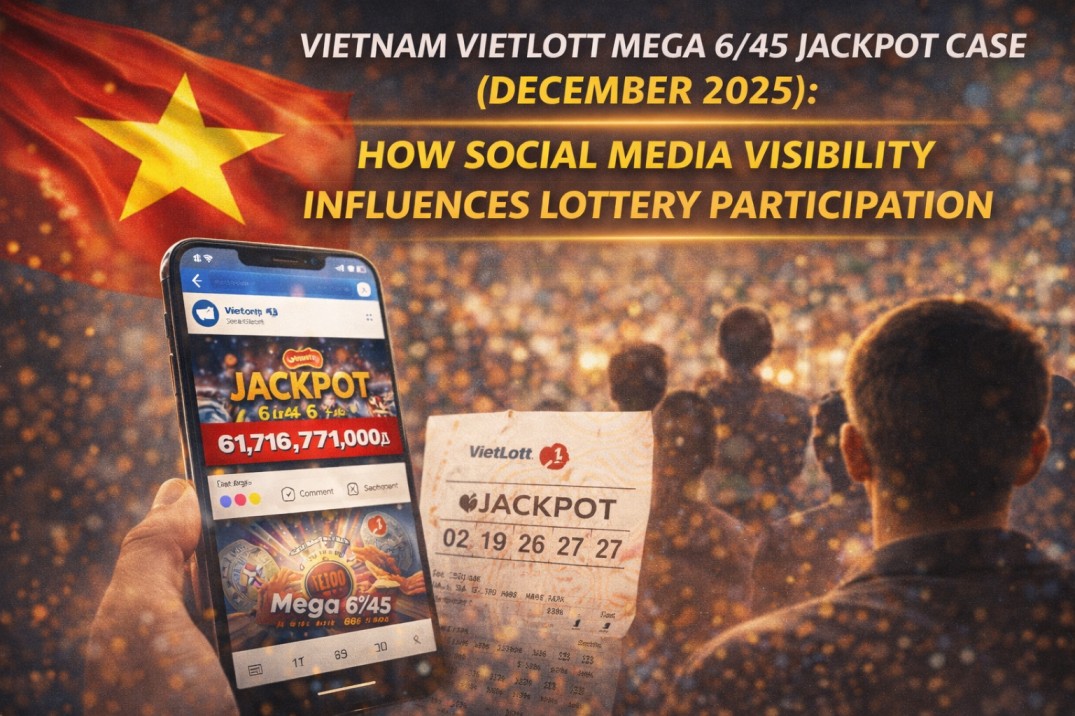
A Vietlott Mega 6/45 Jackpot Case Explained
A recent Vietlott Mega 6/45 jackpot win worth more than VND 61.7 billion drew attention not just for its size, but for what the winner said afterward. The ticket was purchased after the individual came across jackpot-related content on Facebook.
At first glance, this sounds like a familiar lottery anecdote. Look closer, and it reveals something more important.
This is not a story about luck. It is a story about visibility.
The Case in Brief
According to information released by Vietlott, the jackpot winner stated that seeing jackpot news circulating on social media prompted them to buy a ticket.
The draw itself followed standard procedures. The outcome was random. The prize was legitimate.
What stands out is not how the person won, but why they decided to participate at that moment.
Visibility Changes Perception, Not Probability
Social media does not change lottery odds.
What it changes is attention.
When jackpot stories appear repeatedly in feeds, they move from being abstract to being immediate. The lottery stops feeling distant and starts feeling present.
This is a known psychological effect. Humans respond more strongly to what they see often, not to what is statistically likely.
Visibility creates salience. Salience creates action.
Why Seeing Wins Triggers Participation
When people see jackpot news shared online, three things happen almost instantly:
First, the win feels real. A person, not a system, becomes the reference point.
Second, the timing feels meaningful. Even though draws are random, the brain links exposure with opportunity.
Third, participation feels socially validated. If many people are talking about a jackpot, joining in feels normal rather than exceptional.
None of this affects the outcome.
All of it affects behavior.
Social Media as an Amplifier, Not a Cause
It is important to be precise here.
Social media does not cause lottery wins.
It amplifies awareness.
Platforms like Facebook surface stories that are already emotionally charged. A large jackpot fits that pattern perfectly. The algorithm rewards engagement, not probability.
As a result, jackpot news travels faster and wider than neutral information about odds or mechanics.
The winner’s decision was influenced by exposure, not by belief in control.
The Role of Timing Illusions
In behavioral science, this is often described as a timing illusion. When an action follows exposure, the mind connects the two, even if the link is coincidental.
The sequence looks like this:
- Jackpot story appears
- Ticket is purchased
- Win occurs later
The brain remembers the sequence, not the math behind it.
This does not mean the belief is irrational. It means the brain is doing what it evolved to do: create narratives from events.
Why Lottery Authorities Pay Attention to These Moments
For lottery operators, stories like this are not about encouraging play. They are signals of how information flows affect participation patterns.
Visibility spikes often align with:
- Large rollovers
- Viral sharing
- Media amplification
Understanding this helps explain why participation rises during certain periods, even though the underlying mechanics remain unchanged.
What This Case Really Tells Us
The Vietlott Mega 6/45 jackpot case highlights a simple truth.
People do not respond to probability tables.
They respond to stories they see.
Social media turns rare events into visible moments. That visibility lowers the psychological distance between the individual and the lottery.
The system stays random.
Human behavior does not.
Kaching Perspective
This story is not about Facebook making someone lucky.
It is about how visibility shapes participation in uncertain systems.
Lotteries expose chance.
Social media frames attention.
Where those two meet, behavior follows.
FAQs: Social Media and Lottery Participation
Does seeing lottery wins online increase the chance of winning
No. Exposure does not change odds. Each draw remains independent and random.
Why do jackpot stories spread faster than other lottery information
Large wins trigger emotional engagement, which social platforms naturally amplify through sharing and interaction.
Is this effect unique to Vietnam
No. Similar behavior patterns appear in Brazil, the United States, and other high-participation lottery markets.
Do lottery operators control how wins appear on social media
Operators release official information, but how it spreads on social platforms is driven by user behavior and algorithms.
Why do people remember exposure more than statistics
Stories are easier for the brain to process and recall than abstract probabilities, especially under uncertainty.
The fact that the winner’s decision was influenced by social media is a perfect example of how modern visibility can change perceptions and drive behavior. It’s a reminder of how much impact social media has on our lives.