
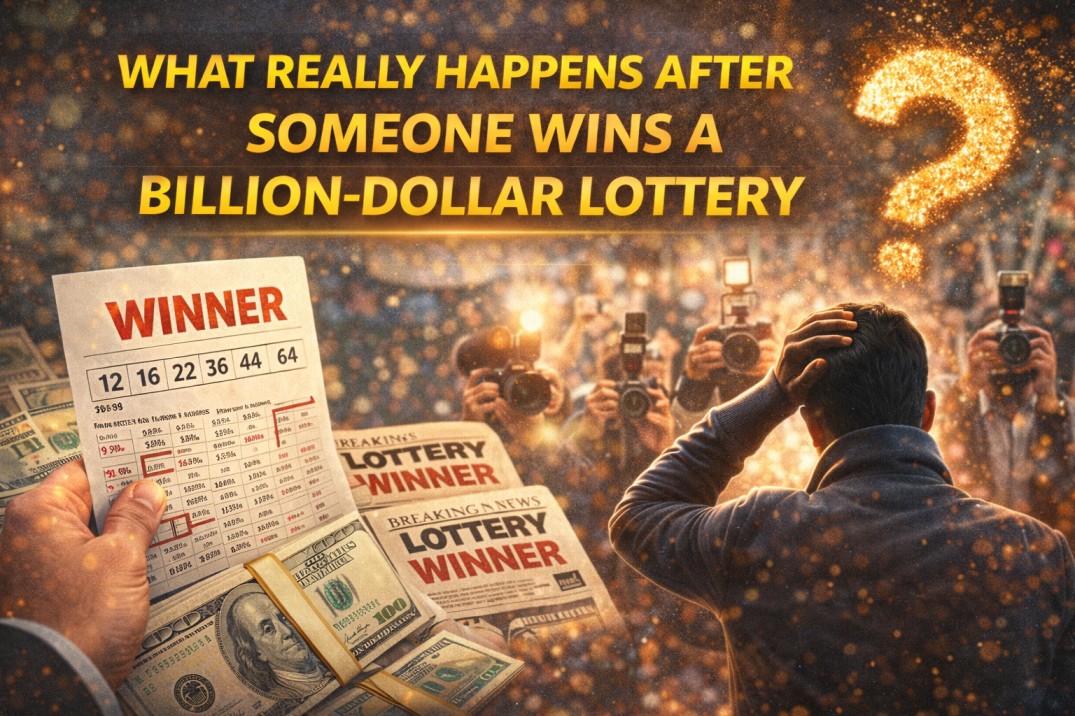
When a lottery jackpot crosses a billion dollars, the story everyone sees is simple.
A ticket wins. A life changes. A dream comes true.
What rarely gets attention is what happens after the cameras leave.
Across countries and lottery systems, the first weeks after a major win follow a surprisingly consistent pattern. Not in numbers, but in human behavior.
This article looks at what actually unfolds after someone wins a massive lottery prize, based on how lottery systems work and how people respond to sudden, extreme outcomes.
The Win Is Instant. The Reality Is Not.
Lottery wins feel immediate, but they are not.
After a winning ticket is confirmed, nothing happens publicly for days or even weeks. Verification processes begin. Legal checks follow. In many systems, winners are required to stay silent while documentation is reviewed.
This gap between expectation and reality is the first shock.
The world imagines champagne.
The winner experiences waiting.
Silence Becomes the First Decision
One of the earliest pressures after a large win is not financial. It is social.
Who should know.
When should they know.
Who must be told versus who will find out anyway.
This is not a small issue. In high-value wins, silence becomes a strategic necessity, not a preference. Once information spreads, it cannot be contained.
Many winners later describe this period as the most stressful phase, even more than managing money.
The System Takes Over Before the Person Does
Lottery systems are designed to control outcomes, not emotions.
After a major win:
- Legal teams appear
- Tax structures are applied
- Claim deadlines are enforced
- Public disclosure rules activate
At this stage, the winner is no longer just a person. They are part of a regulated process.
This transition from individual to case file happens quickly, and for many winners, it feels disorienting.
Choice Overload Is Real and Immediate
Popular narratives focus on spending decisions.
What is often overlooked is decision overload.
Cash or annuity.
Public or anonymous.
Immediate claim or delayed claim.
One-time move or gradual change.
These are not simple choices. They are irreversible ones.
When stakes are this high, even small decisions feel heavy. The brain struggles not because options are limited, but because they are permanent.
Identity Shifts Faster Than Lifestyle
Money changes access instantly.
Identity changes slowly.
Most large lottery winners do not immediately feel rich in the way people imagine. What they feel first is exposed. Watched. Questioned.
Relationships subtly shift. Conversations change tone. Expectations emerge without being spoken.
The money arrives before the new identity is ready to receive it.
Why Bigger Wins Create Bigger Stress
Counterintuitively, billion-dollar wins often produce more strain than smaller wins.
The reason is scale.
At very large amounts:
- There is no reference point
- Traditional financial benchmarks stop applying
- Every decision feels symbolic
A million changes a life.
A billion changes a social position.
That distinction matters.
The Myth of the “Lucky Ending”
Lottery stories are usually told backward.
We see the result and assume the journey was smooth. In reality, the post-win phase is messy, quiet, and emotionally complex.
This does not mean winning is bad.
It means winning is not simple.
The system rewards probability.
Humans live with consequence.
Why These Stories Matter Even to Non-Winners
Most people will never win a major lottery.
But millions imagine it.
Articles about what happens after winning are not really about winners. They are about how people think about control, certainty, and sudden change.
Lotteries expose a universal truth.
Chance is fast.
Adjustment is slow.
Kaching Perspective
Winning a massive lottery prize does not end a story. It starts a different one.
The numbers stop mattering after the draw.
What follows is structure, psychology, and human response.
That part of the lottery is rarely televised.
But it is the part that lasts the longest.
FAQs: Understanding Life After a Major Lottery Win
Why do lottery winners often delay public appearances
Large lottery wins trigger mandatory verification and legal procedures. During this period, public silence is usually part of the process, not a personal choice, to prevent fraud, misinformation, or premature claims.
Do lottery winners immediately receive the full prize amount
No. Even after a winning ticket is confirmed, payouts follow structured timelines defined by the lottery authority, including validation, documentation, and statutory waiting periods.
Why do lottery authorities control how winners are announced
Public disclosure rules exist to protect the integrity of the lottery system. Announcements are coordinated to ensure transparency, confirm legitimacy, and comply with legal and regulatory frameworks.
Does a larger jackpot change how the lottery system treats the winner
The system remains the same, but larger jackpots involve more scrutiny. Higher prize amounts typically trigger additional layers of verification, legal review, and administrative oversight.
Why do post-win stories often focus on stress instead of celebration
Media narratives tend to simplify outcomes, but human response to sudden, extreme change is complex. Stress often comes from uncertainty, attention, and adjustment rather than from the money itself
It’s fascinating how the excitement of winning can quickly turn into a period of waiting and pressure. The emotional toll of having to navigate media attention and make life-altering decisions isn’t something most people consider when imagining a lottery win.