
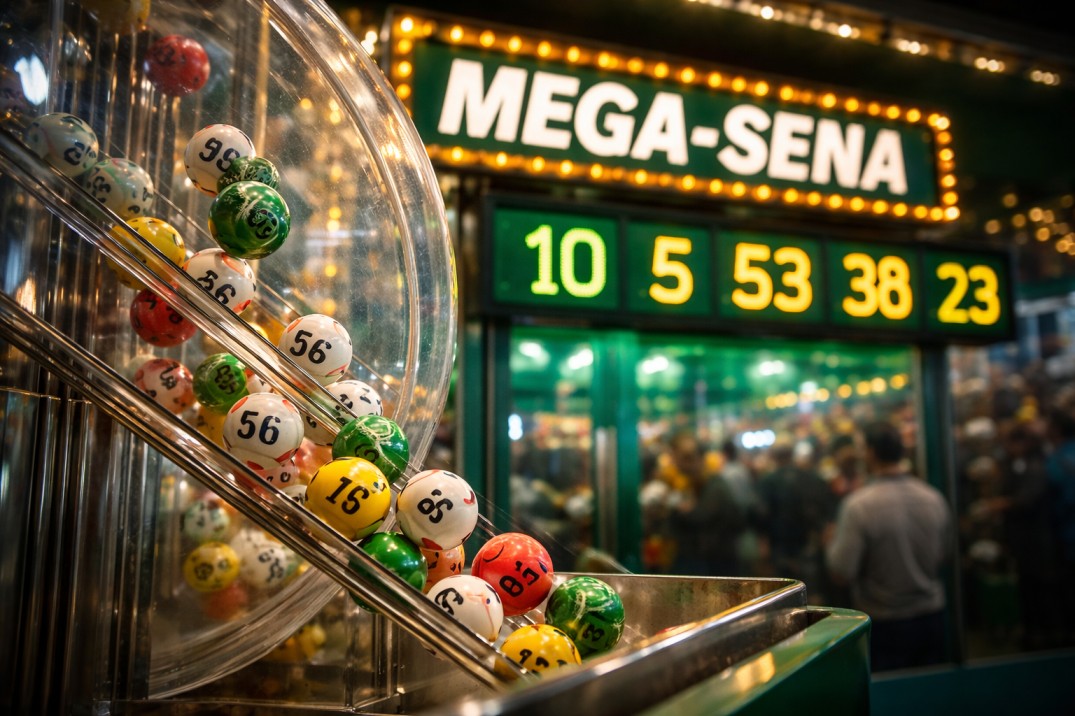
Mega-Sena draws 6 numbers from a pool of 60.
That alone creates over 50 million possible combinations.
Now add frequency.
Unlike many lotteries that draw once or twice a week, Mega-Sena runs frequent draws with long rollover cycles. Over time, this has produced an unusually large and dense dataset.
Normally, more data smooths randomness.
Here, it does the opposite – it exposes it.
When long-term frequency charts are plotted, certain numbers like 10, 5, and 53 sit well above their expected averages, while others remain stubbornly cold.
Statistically? Allowed.
Psychologically? Unsettling.
People expect randomness to feel balanced.
Mega-Sena refuses to cooperate.
Physical Machines Leave Fingerprints in the Data
Mega-Sena relies on physical ball-draw machines, not purely digital RNG systems.
These machines are regulated and audited but they are still physical.
Balls have tolerances.
Air pressure fluctuates.
Equipment ages.
None of this creates cheating.
But it does create texture.
Over thousands of draws, these microscopic differences become visible in the data. Other lotteries especially digitally smoothed systems tend to hide these effects.
Mega-Sena puts them on display.
Big Jackpots Compress Randomness Into Short Bursts
Mega-Sena is famous for rollovers that grow absurdly large.
During these periods:
- Draw schedules tighten
- Public attention spikes
- Participation surges
The effect on the data is subtle but important.
You get dense clusters of outcomes in short timeframes. Later, when analysts map patterns, these clusters appear louder than they would in evenly spaced draws.
The randomness is real.
The timing amplifies how it looks.
Human Behaviour Makes Patterns Feel Even Louder
Mega-Sena is deeply social.
Office pools.
Family syndicates.
Neighbourhood groups.
Certain numbers carry emotional weight:
- Birthdays
- Football references
- Regional beliefs
When those numbers hit, people remember.
When they stay cold, people talk.
This doesn’t change the outcome but it dramatically changes perception.
Mega-Sena becomes a story people follow, not just a result they check.
Patterns Exist – Predictability Does Not
This is where most players get it wrong.
Yes, Mega-Sena shows visible patterns:
- Hot numbers stay hot longer
- Cold numbers stay cold longer
- Clusters appear
None of this improves prediction.
What it does improve is understanding.
Mega-Sena shows what randomness looks like when it isn’t polished, filtered, or softened to feel comfortable.
Why Analysts Keep Coming Back to Mega-Sena
From a fairness standpoint, Mega-Sena is no different from other major lotteries.
From a pattern standpoint?
It is one of the most expressive systems in the world.
High draw volume.
Physical mechanics.
Long rollovers.
Intense public engagement.
Together, they create a number history that feels alive – messy, uneven, human.
That’s why Mega-Sena analysis content performs so well.
People aren’t chasing certainty.
They’re trying to make sense of something that refuses to behave neatly.
The Real Lesson
Mega-Sena doesn’t create unique patterns because it’s designed differently.
It creates them because it shows randomness without trying to make it look pretty.
And that honesty is what makes it so compelling.