
The cryptocurrency market has created overnight millionaires, trillion-dollar ecosystems, and a new financial frontier. But behind the headlines about explosive gains lies a quieter reality: thousands of crypto coins have failed, disappeared, or become worthless.
From abandoned altcoins to high-profile collapses, the crypto graveyard keeps growing. According to industry trackers, tens of thousands of tokens launched over the past decade are no longer actively traded or developed.
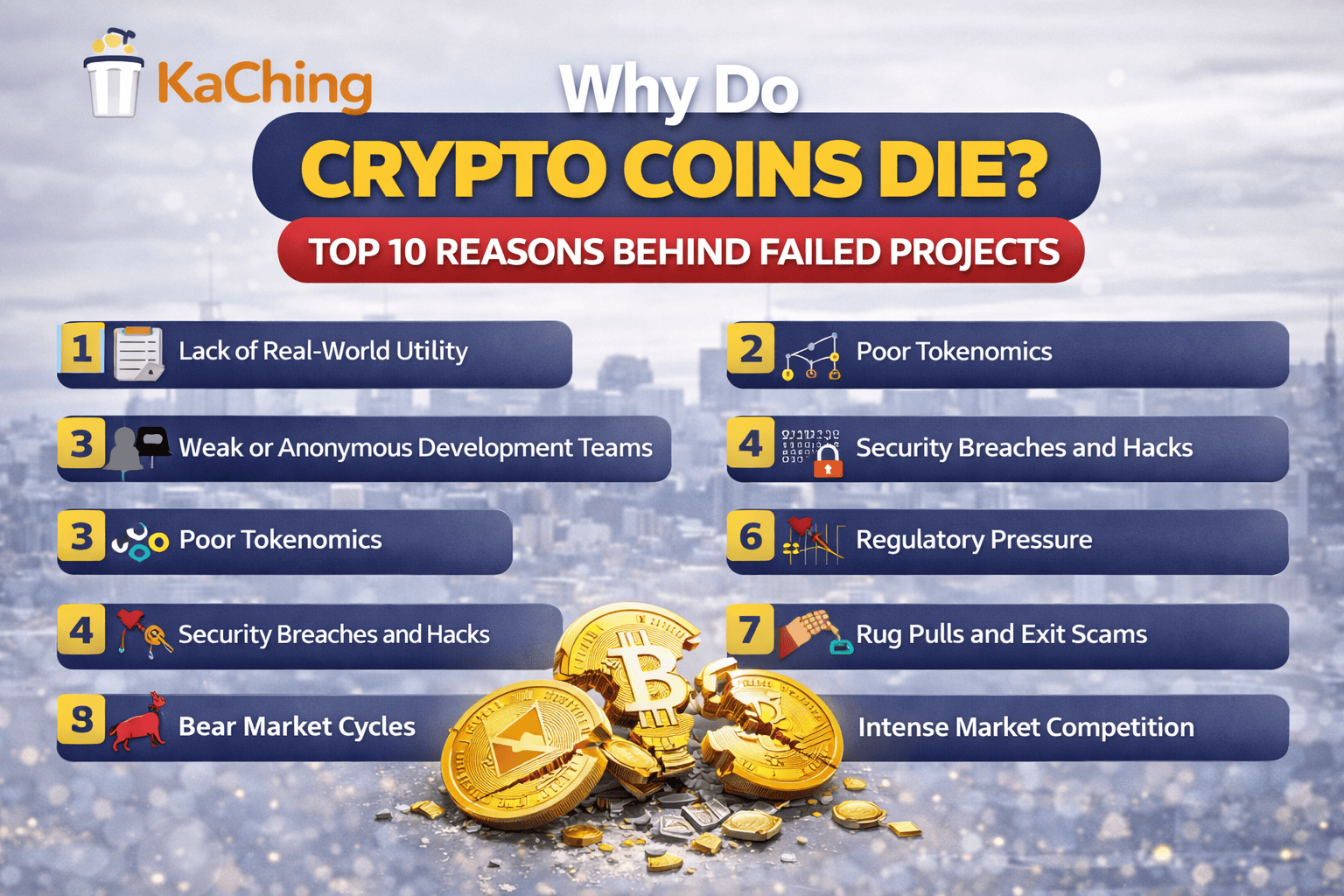
So why do crypto coins die? Here’s a deep dive into the top 10 reasons behind failed crypto projects, explained in clear, practical terms for investors and observers alike.
1. Lack of Real-World Utility
The most common reason coins fail is simple: no real use case.
Many projects launch with vague promises but offer no product, no adoption strategy, and no clear problem they solve. Once hype fades, demand collapses and so does the token’s price.
A sustainable cryptocurrency typically needs:
- A clear function
- Active users
- Developer engagement
- Long-term ecosystem growth
Without utility, speculation alone cannot sustain value.

2. Weak or Anonymous Development Teams
Trust is currency in crypto.
Projects led by inexperienced, anonymous, or unverifiable teams often struggle to build credibility. If the developers disappear or fail to deliver roadmap milestones, investor confidence evaporates quickly.
In several failed projects, founders simply stopped communicating, leaving communities in the dark.
3. Poor Tokenomics
Tokenomics the economic design of a coin can determine survival or collapse.
Common tokenomic flaws include:
- Excessive token supply
- High inflation rates
- Uncontrolled minting
- Early insider allocations
If supply grows faster than demand, price pressure becomes inevitable.
4. Security Breaches and Hacks
Crypto history is filled with exchange hacks and smart contract exploits.
When projects suffer security breaches:
- Funds are drained
- Trust collapses
- Regulatory scrutiny increases
Many smaller coins never recover from major security incidents.
5. Regulatory Pressure
Governments worldwide continue refining crypto regulations.
Projects that fail to comply with securities laws, anti-money laundering rules, or licensing requirements risk:
- Exchange delistings
- Legal action
- Frozen operations
Regulatory uncertainty has contributed to the downfall of numerous tokens.
6. Rug Pulls and Exit Scams
Not all failures are accidental.
Some projects are intentionally designed as scams. Developers build hype, attract liquidity, then withdraw funds — a practice known as a rug pull.
These incidents not only destroy the specific coin but also damage broader market trust.
7. Intense Market Competition
The crypto market is brutally competitive.
Thousands of new tokens launch each year. Even legitimate projects struggle to:
- Attract users
- Secure exchange listings
- Build partnerships
- Maintain visibility
Without strong differentiation, coins get buried under newer narratives.
8. Bear Market Cycles
Crypto is cyclical.
During bull markets, even weak projects attract capital. But in prolonged bear markets, liquidity dries up. Investors prioritize stronger ecosystems, leaving smaller altcoins to fade away.
Many tokens that surged in bull runs never recovered once the cycle turned.
9. Overdependence on Hype
Marketing can launch a token but it can’t sustain it forever.
Coins heavily reliant on influencer promotion, social media trends, or celebrity endorsements often crash once attention shifts elsewhere.
Hype without fundamentals is fragile.
10. Lack of Community and Developer Support
Strong crypto ecosystems rely on:
- Active communities
- Continuous development
- Transparent updates
When development stalls or communities fragment, network effects disappear and so does momentum.
FAQs
1. How many crypto coins have failed so far?
While exact numbers vary, industry tracking platforms estimate that thousands of tokens launched since 2013 are now inactive, delisted, or abandoned.
2. Can a “dead” crypto coin recover?
It’s rare but possible. If development resumes or a new team acquires the project, some tokens have revived. However, most never regain meaningful traction.
3. Are meme coins more likely to fail?
Meme coins often rely heavily on community hype rather than utility. While some succeed, many lack long-term development plans, increasing failure risk.
4. What happens to your investment if a coin dies?
If liquidity disappears or exchanges delist the token, selling becomes difficult or impossible effectively rendering the investment worthless.