
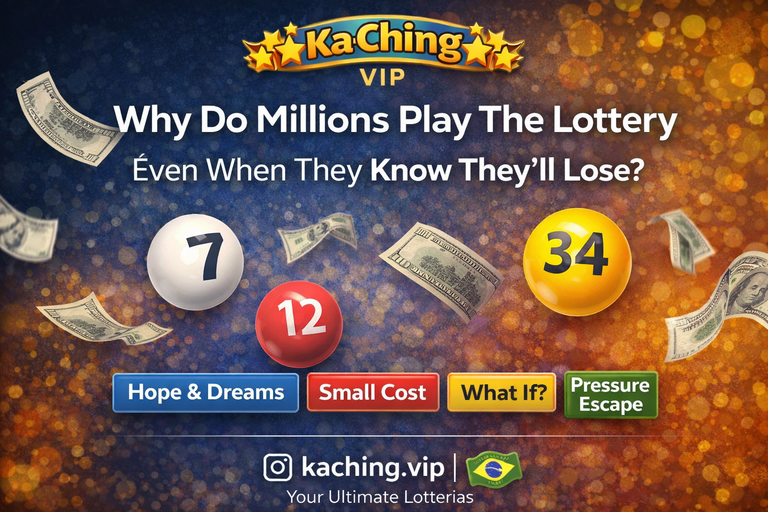
Every week, millions of people around the world buy lottery tickets fully aware of the odds stacked against them. The math is clear, the chances are tiny, and yet participation never slows down. So why does the lottery continue to attract players who know they are unlikely to win?
The answer isn’t just about money. It’s deeply tied to psychology, hope, culture, and how the human brain handles risk and reward.
It’s Not About Winning – It’s About Hope
For many players, the lottery is less a financial strategy and more an emotional one. Buying a ticket creates a short window of optimism – a few days where people imagine a different future. That imagination itself has value.
Psychologists often describe this as “paid hope.” For a small amount of money, players get to daydream about freedom from debt, quitting a stressful job, helping family, or traveling the world. Even if the dream never becomes real, the feeling it creates is powerful and comforting.
The Brain Loves “What If?”
Human brains are wired to respond strongly to possibilities, not probabilities. Even when people understand the odds intellectually, emotionally they focus on the fact that someone will win.
This is why stories of real winners matter so much. Seeing or hearing about a winner triggers the thought: “If it happened to them, it could happen to me.” That emotional response often outweighs logical reasoning.
Small Cost, Big Fantasy
A lottery ticket usually costs less than a coffee or a movie ticket. Because the price feels small, the potential loss doesn’t register as serious. But the potential reward is enormous.
This imbalance – low cost versus massive upside – makes the lottery feel “worth a try,” even for people who know better. It’s a classic case of humans overvaluing rare but dramatic outcomes.
Social and Cultural Influence
Lotteries are often social experiences. Office pools, family discussions, and group chats about numbers make playing feel normal and shared. In many cultures, lotteries are also linked to tradition, superstition, or lucky dates.
When everyone around you is playing, not playing can feel like missing out – especially when jackpots dominate news headlines.
Escaping Everyday Pressure
For some players, the lottery is a mental escape. During times of economic stress, job insecurity, or personal struggles, the idea of a sudden life-changing win becomes even more attractive.
In this sense, lottery participation often rises during difficult periods – not because people are irrational, but because hope becomes more valuable when reality feels heavy.
Knowing the Odds Doesn’t Stop the Feeling
Most regular players are not ignorant of the odds. They know the chances are slim. But knowledge doesn’t cancel emotion. Humans routinely make decisions based on feelings, stories, and imagination – not just numbers.
The lottery survives because it taps into something universal: the desire for a better future, even if the path to it is unlikely.
FAQs
Is playing the lottery a sign of poor financial judgment?
Not necessarily. For many people, lottery spending is entertainment, not investment. Problems arise only when spending exceeds what someone can comfortably afford.
Why do jackpots attract more players even though the odds don’t change?
Larger jackpots increase emotional impact and media attention, making the potential reward feel more “real,” even though the probability stays the same.
Can understanding psychology help people play more responsibly?
Yes. Recognizing that the lottery sells hope and excitement not guaranteed wealth – can help players set healthy limits and keep the experience fun rather than harmful.