
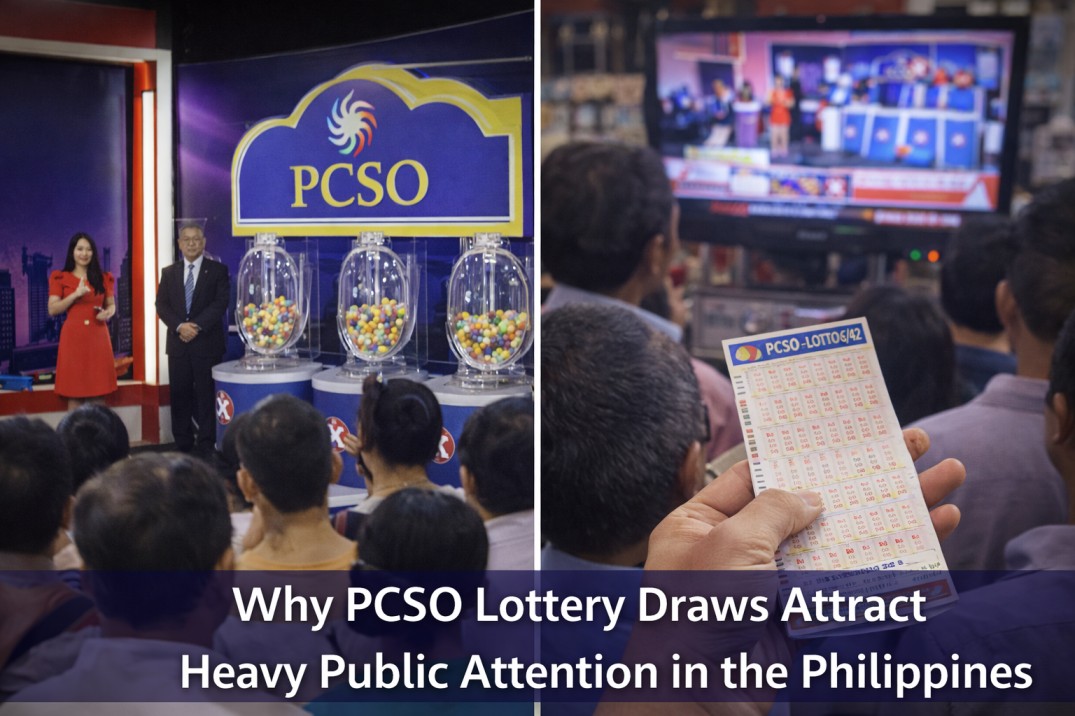
Every night a PCSO draw is held, something unusual happens in the Philippines. People pause. Shops keep televisions on. Social media fills with numbers. For a few minutes, the country watches balls roll inside a transparent drum.
This level of attention is not accidental. PCSO lottery draws are not just gambling events. They are public moments.
The Role of PCSO in Daily Filipino Life
The Philippine Charity Sweepstakes Office is not seen as a private lottery operator. It is a government institution that has existed for decades and is closely linked to public welfare.
For many Filipinos, PCSO represents:
- State-backed legitimacy
- Charity funding for healthcare and social services
- A rare chance at upward mobility
Because of this, PCSO draws carry more emotional weight than private betting games.
Live Draws Create Trust Through Visibility
One key reason PCSO draws attract attention is how they are conducted.
The draws are:
- Televised or streamed live
- Conducted in a studio setting
- Overseen by officials and auditors
- Transparent in process
This openness matters in a country where trust in institutions is hard-earned. Seeing the draw live reassures viewers that results are fair and untampered.
For many, watching the draw is as important as buying the ticket.
Low Ticket Prices, High National Participation
PCSO tickets are affordable. This is critical.
Because entry costs are low:
- Participation cuts across income levels
- Students, workers, vendors, and retirees all play
- Almost everyone knows someone who buys tickets
When millions participate, attention becomes collective. Even non-players often follow the results because family or friends are involved.
The “No Winner” Effect Keeps People Watching
Interestingly, draws with no jackpot winners often increase attention, not reduce it.
When PCSO announces:
“No jackpot winner”
People immediately think:
- The jackpot will grow
- The next draw will be bigger
- Their chances feel more exciting
This rollover effect keeps audiences coming back repeatedly, especially during weeks of consecutive no-winner draws.
Results Spread Beyond Television
PCSO draw results do not stay on TV.
They move through:
- Facebook posts
- Group chats
- Community boards
- Conversations at sari-sari stores
In rural areas especially, results are shared verbally the next morning. The draw becomes a social topic, not a private activity.
Hope, Not Just Money, Drives Attention
Most PCSO players know the odds are slim.
Yet the draw attracts attention because it represents:
- Hope without judgment
- A dream that costs very little
- A rare equalizer across social classes
For a few minutes each draw night, everyone watches the same numbers with the same expectation.
That shared experience matters.
Why PCSO Draws Feel Different From Online Betting
Unlike online betting apps, PCSO draws:
- Are not constant
- Do not push notifications aggressively
- Happen at fixed times
This scarcity makes them feel special. When something happens only once a day, people pay attention.
The Cultural Habit of Watching the Draw
Over time, watching PCSO draws has become a habit in many households. Parents pass it on to children. Vendors remember old winning numbers. Elders recall famous jackpot stories.
This continuity gives PCSO draws a cultural memory that newer platforms lack.
What This Means for PCSO’s Future
As digital platforms grow, PCSO’s strength will remain its public ritual nature.
As long as draws stay:
- Transparent
- Accessible
- Affordable
- Regular
They will continue to attract mass attention, even in a changing media environment.
FAQs – PCSO Lottery Draw Attention
Why do so many people watch PCSO draws
Because they are live, transparent, affordable, and emotionally significant.
Are PCSO draws televised
Yes. They are broadcast live or streamed through official channels.
Do people watch even if they don’t buy tickets
Yes. Many follow results because family or friends participate.
Why do “no winner” draws increase interest
Because jackpots roll over and grow, creating more excitement for future draws.
Is PCSO a government organization
Yes. PCSO is a government-owned and operated institution.