
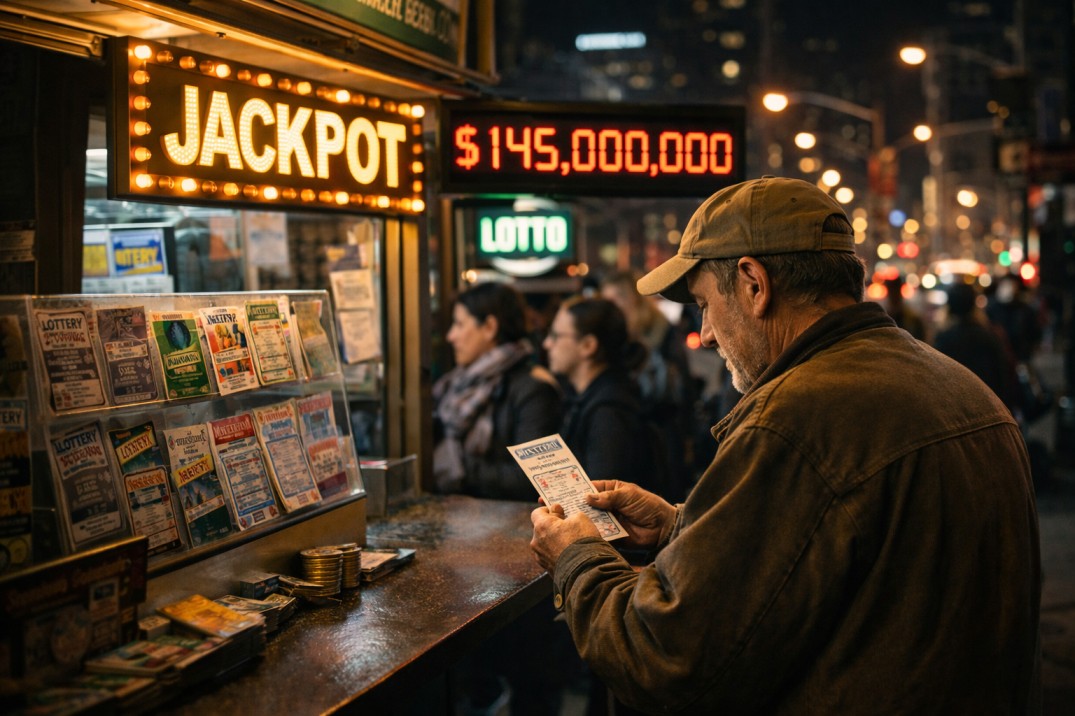
This behaviour shows up every time and it makes people uncomfortable
Whenever economies slow down, lottery participation starts creeping up.
Not dramatically.
Not loudly.
But consistently.
This makes people uneasy.
Because it clashes with a comforting belief: that hard times make people more rational.
They do not.
They make people search for exits.
It doesn’t start with desperation. It starts with stagnation.
Most people imagine lottery players during downturns as reckless or desperate.
That image is wrong.
What actually triggers this behaviour is stagnation.
Jobs stop moving.
Promotions disappear.
Businesses pause growth.
Effort stops producing visible progress.
Even people who are financially stable start feeling trapped in place.
That is the moment lotteries re enter the conversation.
When the future stops responding, people look for shortcuts
In healthy economies, the future feels negotiable.
Work harder. Wait longer. Improve slowly.
In slowdowns, waiting feels dangerous.
There is no feedback loop.
No signal that patience will be rewarded.
A lottery ticket does something very specific here.
It collapses time.
You act.
You wait briefly.
You get an answer.
That immediacy matters more than the odds.
Spending doesn’t spike. Participation spreads.
This is where most commentary gets it wrong.
People do not suddenly start spending heavily on lotteries during downturns.
The average spend barely moves.
What changes is participation.
More people buy a single ticket.
Few people buy many.
This pattern shows up across crises. The 2008 financial collapse. The post pandemic slowdown. Regional recessions across Europe and Asia.
This is not irrational gambling.
It is controlled exposure to possibility.
A lottery ticket feels safer than most “sensible” risks
During economic stress, people avoid risks with unclear downside.
Markets fall and linger.
Businesses bleed slowly.
Career bets take years to resolve.
A lottery ticket does not.
The loss is immediate.
The cost is fixed.
The outcome is final.
Emotionally, that feels safer than long, ambiguous risk when everything else already feels unstable.
People know the odds. That’s not the point.
One of the laziest explanations for lottery participation is ignorance.
Most players understand the odds perfectly well.
They talk about them.
They joke about them.
They dismiss them.
They play anyway.
Because they are not buying probability.
They are buying permission.
Permission to imagine change without committing to a risky, long-term decision.
Economic stress rewires what people value
Slowdowns do something subtle.
They reduce trust.
Trust in institutions.
Trust in systems.
Trust that the rules will reward effort fairly.
When trust weakens, transparency becomes critical.
This is why people start caring more about how outcomes are generated, not just what the prizes are. Opaque systems feel threatening during uncertain times.
Clear rules feel calming.
This pattern repeats because it fits human behaviour too well
Lotteries do not grow during slowdowns because people give up.
They grow because other systems stop responding.
Careers stall.
Markets wobble.
Planning loses clarity.
A lottery remains simple.
You know the rules.
You know the cost.
You know when it ends.
That structure becomes strangely comforting when progress elsewhere pauses.
The uncomfortable truth
Economic slowdowns do not create lottery behaviour.
They expose it.
They reveal how people react when effort stops producing momentum.
And they show that when the future feels blocked, people will always test side doors even if the odds are long.