
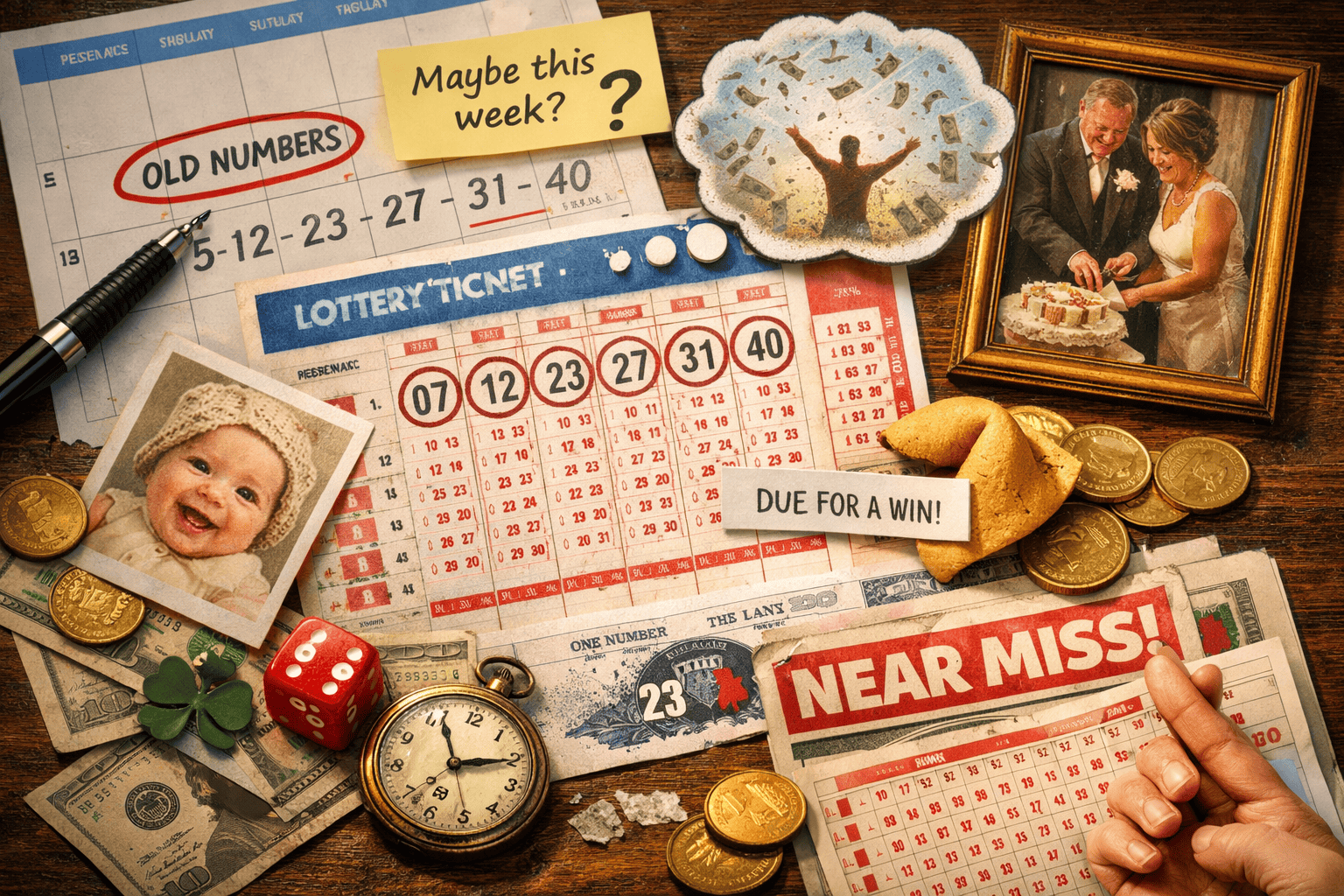
Every lottery draw brings the same curious sight: millions of tickets filled with familiar number combinations. Birthdays, anniversaries, “lucky” digits numbers that players have been using for years, sometimes decades. Even when logic suggests changing strategies or letting a machine pick randomly, many people stick to the same set. Why?
This habit isn’t just about superstition. Psychologists, behavioral economists, and even lottery officials say the reasons go much deeper than luck.
A Fear of Regret That Runs Deep
One of the strongest reasons people never change their numbers is regret avoidance. Players often imagine a nightmare scenario: What if I change my numbers this week, and my old ones finally win?
That single thought is powerful enough to keep someone loyal to the same digits for life. Even if the odds remain exactly the same, the emotional cost of “missing out” feels far worse than continuing with a familiar choice.
In short, players aren’t chasing probability they’re avoiding future regret.
Numbers Become Personal Stories
For many people, lottery numbers are not random at all. They’re tied to life events:
- A child’s birth date
- A wedding anniversary
- A house number
- A loved one’s age
Over time, these numbers become part of a personal narrative. Playing them feels meaningful, almost respectful to memories and relationships. Changing them can feel like breaking a routine or abandoning a belief that has emotional value.
That emotional attachment often outweighs any statistical reasoning.
The Illusion of “Due” Numbers
Another reason people stick with the same numbers is the belief that persistence will eventually pay off. If someone has been playing the same combination for 10 or 15 years, it can feel like those numbers are due to hit.
This is a classic example of the gambler’s fallacy the mistaken belief that past outcomes influence future random events. In reality, every draw is independent. Numbers don’t remember how long they’ve been played.
Still, the human brain loves patterns, and consistency creates a false sense of progress.
Routine Feels Safer Than Change
Lottery participation often becomes a ritual: same shop, same day, same numbers. Rituals create comfort and reduce decision-making stress. Once a routine is formed, changing it feels unnecessary or even risky.
For regular players, sticking with the same numbers isn’t about strategy at all. It’s about familiarity and emotional security.
Does It Actually Improve Your Chances?
From a mathematical standpoint, playing the same numbers for years offers no advantage over choosing new numbers each draw or using a quick-pick option. The odds remain exactly the same.
But lotteries aren’t played with calculators alone. They’re played with hope, memory, fear, and imagination — and that’s why habits last far longer than logic.
The Human Side of Lottery Play
At its core, the lottery isn’t just a numbers game. It’s a psychological one. People play the same numbers year after year not because they believe it guarantees a win, but because it feels right.
And in a game built on dreams, feelings often matter more than facts.
FAQs Of People Keep Playing the Same Numbers for Years
1. Is it bad to play the same lottery numbers every time?
No. It doesn’t reduce or increase your odds. The choice is emotionally driven rather than mathematical.
2. Do quick-pick numbers have better chances than personal numbers?
No. Randomly generated numbers and self-chosen numbers have identical probabilities of winning.
3. Why do so many people avoid changing numbers even after years of losing?
Because the fear of missing a win after switching is emotionally stronger than the disappointment of continuing to lose.